Showing posts with label In Revue. Show all posts

Monday, October 6, 2014

In Revue- 'You're Dead! (Flying Lotus)


The "new jazz" is what one enthusiastic Stereogum commenter calls the fifth Flying Lotus album You're Dead! But really that descriptor, while accurate, is one of countless ways to frame Steven Ellison's new masterpiece. Astral. Spacey. Soulful. Warm. Aggressive. Calm. Lively. Necromancing. Bold. Quiet. Circular. Universal. Those words are all equally appropriate. Particularly the last of that laundry list. Not "universal" in the sense that this album could be loved by everyone; it's far too "experimental" for that. Universal meaning that it shapes and molds stray notes into something so cosmically vast that continued exploration is not tiresome.

I've lived inside of You're Dead! for four days now, playing it at least 20 times all the way through. I've sprinkled flecks of ginger onto chicken while the funk guitars of "Cold Dead" surged from my speakers. A quilt covered my head when the tense strings of "Turkey Dog Coma" faded into the stale air of my dark bedroom. I bounced to the Snoop Dogg feature "Dead Man's Tetris" on the way to class in my Scion XB and felt like Leo in Titanic, "king of the world." And not once during any of those moments did I have the slightest urge to turn the music off.

Part of that can be chalked up to the hypnosis FlyLo puts you under on You're Dead! "Theme"'s initial raga-style drones create such a dense haze that movement is impossible. The image of a runner trying to push through an Olympic-sized pool of Jell-O comes to mind when Kendrick Lamar’s laudable verse bolts over "Never Catch Me"'s hobbled synthesizers. "Step inside of my mind and you'll find curiosity, animosity, high velocity like the prophesied meditation," the Compton MC breathlessly promises. With those rapidly firing neurons, he stalls on the simple idea of a song uniting us all in love. If we can find any kind of common ground, we can delay the “embalming fluid” for as long as possible.

Of course the whole idea of You're Dead! is that the pale specter of death will visit everyone, at least one time, if not more. The crooning vocals of "Coronus, the Terminator" could just as easily be the Grim Reaper's as Otis Redding's or Al Green's. Those little trembles in the background couldn’t possibly come from this plane of existence. FlyLo's metronomic drum claps move your feet, but those consciously weird effects paw at your soul with icy hands. The panning guitar that opens the track sounds is Isaac Hayes crossing over at séance. Or a funky soundtrack to crossing the River Styx.

Ellison never once says on the album that death isn't fearful, but he doesn't have to. The bold glimmering music speaks volumes about the beauty that lies in flatlining. There are former Dirty Projectors member Angel Deradoorian's sighs in "Siren Song" which fizz like a plastic bottle of gently shaken Sprite. Each "ooh" and "ahh" over the wah-wahing guitars and muttering bass is a pat on the back, a warm reassurance that everything will be okay in the end. The comfort continues into "Turtles" where the background jangle of wind-chimes and twittering birds calmly greet you. Initially it's jarring to hear something so naturalistic on an electronic album, but FlyLo's proven over time that he can make anything sound organic. Snoop Dogg's laconic G-funk drawl has no business pairing with experimental electronic-jazz, or whatever clunky descriptor you want to use for You're Dead!, but it's there on the hallucinatory 8-bit take "Dead Man's Tetris." "No jokes, no hoax, felt his palms he had no pulse" Snoop easily raps, sounding as good as he has at least since "That Tree." When Ellison's able to not only collaborate with true legends, but get them to bend to the afterlife narrative he's crafting, you see how inspiring his vision is.

If this all this talk of "grand visions" and death sounds self-serious, it isn't. Ellison's on record as saying, "I try to think about these things with a tongue-in-cheek perspective," and it's been rightly pointed out that the "joyous" exclamation point in the album title sheds some weight from the subject. "I wanted it to be playful, because it's the one experience we have in common. I wanted to make something that captures death from different angles—from the sad moments, to the confusing moments, to maybe even the blissful and silly ones," Ellison said in a Pitchfork Update.

That playfulness is everywhere. "Ready Err Not" ingeniously incorporates a version of the Looney Tunes "boing" sound effect into a mélange of metronomic ticks and aquatic bleeps. A laugh suspiciously similar to the Mortal Kombat chuckle bellows in "The Boys Who Died in Their Sleep." Something about Thundercat's feathery singing of "walls are closing in" on "Descent Into Madness" makes me picture a wise guy angel who can't keep from cracking jokes when you approach the pearly gates. He wants to get in one last knock-knock joke before he writes your name into the Book of Life. He says "there's no escape" but it's in such an airy tone that you'd never believe him.

A form of acceptance finally comes when Kimbra and Laura Darlington's voices coolly stutter "we will live on forever" as lithe bop piano sweeps up the last pieces of a life in closer "The Protest." It's a simple and calm declaration, one far less harried than the footwork moves around it, but incredibly profound. For all the worrying we do about the temporary nature of life, we never stop to think how long our names can live on. We don't consider that one simple action of opening a door for someone or letting another car go past in traffic can travel from one person to another in an unbreakable chain. Will all the cells in our bodies eventually wither away? Absolutely. So will every piece of hair, every hunk of skin, every last nail. But focusing on individual pieces is too myopic. We need to look at the bigger picture and see that death is just a part of life and vice-versa. So it goes with every cry, laugh, whisper and scream of You're Dead!. They're all fleeting moments pieced together to form a timeless album.


Wednesday, August 6, 2014

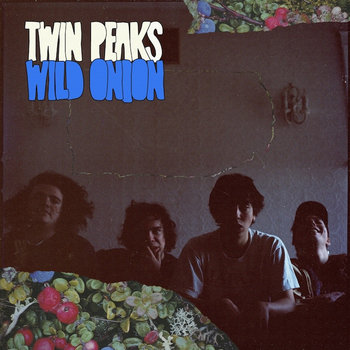
In Revue- 'Wild Onion' (Twin Peaks)


Monday on the blog while discussing "Big Dusty," the noirish new single from Pro Era leader Joey Bada$$, I used the phrase "old soul" to describe how the 19-year-old sounds on wax. His rasp, combined with an affinity for sunny mid-90s boom bap, puts him out of sync with the current hip hop world. But no matter how misplaced he is in the musical landscape of 2014, I wish I had saved the phrase "old soul" for Chicago garage rock quartet Twin Peaks. Everything about the band and their euphoric sophomore LP Wild Onion makes me want to start checking IDs. I know musical appreciation can transcend age, my own birthday is nearly 30 years removed from the release of the Ronettes' "I Wonder," but Twin Peaks are a step beyond "appreciation." You don't land on an album cover like that unless you've spent hours staring at the record jackets for 60s acts like the Seeds or the Plastic Cloud. One spin of the Rolling Stone's Sticky Fingers doesn't birth "Brown Sugar"'s jangly fraternal twin "I Found a New Way." Hell even the title brings to mind Ognir and the Nite People's never-ran 1965 song "I Found a New Love." In a recent profile for Stereogum  lead singer/guitarist Cadien Lake James told the site, "People are still digging back and finding the good s*** on their computers." From the aesthetic of Wild Onion James is almost certainly one of those nostalgic obsessives; clicking through countless hyperlinks of Nuggets rejects until he finds the one that hits his ear just right.

That's the only way I can explain early album standout "Mirror of Time." I'd bet my meager inheritance that I've heard those same guitars lightly chiming over the same slop bucket drums at least once. James' lysergic whine, "when I look at the tears from your eyes don't regret a single word that I've told her," has wafted into my ears before. Granted I would likely remember such a beautifully simplistic confession, which is what keeps me from screaming "COPYCAT!" James said in the aforementioned profile "I'm always going for the Beach Boys sounds even though it probably doesn’t come across much," and he's 1000% right. I don't hear one of Brian Wilson's "teenage symphonies to God" when I play "Mirror of Time." James’ talk of distance is more closely aligned with the frigid world of Raspberries precursors the Choir. In fact "Sloop Jay D," the band's tip of the hat to Pet Sounds track "Sloop John B," doesn't even faintly recall the Beach Boys' effort. It's too reverberated, too tossed off and far too snotty, "don’t be a p**** that’s what she f***ing told me," goes one lyric. Whatever familiar notes are ringing in the band's heads come out sounding very different.

Twin Peaks claim reverence for past acts, but there's a youthful flippancy on Wild Onion that keeps them from being a straightforward bar band. The blistering "Fade Away" could "walk in a straight line" across the Ramones' "Rockaway Beach" if not for the brief mid-song solo sending it off course. "Strange World"'s dreamy crawl is perfect for a "songs to relax to" playlist though it's over before you can even lay your head down. Aided by Connor Brodner's pattering drums and Clay Frankel's dew drenched guitar "Ordinary People" could be slotted on the Clientele's lush 2000 record Suburban Light without raising alarm; at least until the indeterminably eerie chattering starts. One way to describe Wild Onion is a mixtape someone's given you that they've re-winded or fast-forwarded too many times. 

And like a 20-year-old cassette, Wild Onion has its defects. "Stranger World" is an unnecessary instrumental sequel bogged down by bleating horns and meandering guitar lines. Cadien Lake James vocal take on "Strawberry Smoothie" attempts the trick of sounding insecurely "powerful," a routine Big Star's "Feel" mastered in 1972. Jack Dolan's bass work at times is plagued by the same silent disease as many 60s garage rock songs. Several of James and Frankel's riffs feel like castoffs from the Exile on the Main Street, another big rock album the band rhapsodizes about. Oddly enough though, those slight failures to live up to the standards set by Twin Peaks’ heroes are what make Wild Onion so enjoyable. Not many kids are out there carving new work from the statues of legends.

Monday, August 4, 2014

In Revue- 'They Want My Soul' (Spoon)


I've listened through Spoon's They Want My Soul at least 12 times since the Austin quintet's eighth studio LP was made available for streaming last Monday. Part of that is a requirement for writing a review. I have to know what I'm talking about and the easiest way to gain that knowledge is to absorb as much of the music as possible. Also I've hit a dozen because Spoon's studio trickery demands repeat listening. It's true that any good to great record will have you finding new wrinkles with each listen, but with Spoon it's an ironclad law. No way could you hear every double tracked vocal or bass hiccup in one pass. Finally I'm into double digits with They Want My Soul because it's a terrific record. In the course of a scant 37 minutes it creates a world that I could live in forever and never grow bored of.

It's been four years since the indie stalwarts released the slowly revealing Transference, and from the sounds of They Want My Soul Spoon spent all of the 2 million plus minutes stripping the record down to its essentials. Never mind that lead singer Britt Daniel started "super group" the Divine Fits or the band was called up to the big leagues for a second time, when you play They Want My Soul you picture the band huddling around a soundboard and fiddling with knobs for hours on end. "We lived in the studio, I mean we stayed in the studio," Daniel told NPR's Bob Boilen and Robin Hilton about their time working with Flaming Lips cohort Dave Fridmann. Splitting duties with U2/Elton John/Beck/Shins engineer/producer Joe Chiccarelli, Fridmann and the industry vet took Bruce Springsteen's "four corners approach" and created rock that's as thrilling with headphones pressed to your ears as it is blasting out of speakers.

Opener "Rent I Pay" belongs to the latter variety. Gut shots from drummer Jim Eno are the first thing we hear on the record, followed closely by a jangled guitar. Britt Daniel is remarkably measured thanks to piping organ that eases the tension and allows him to casually shrug his shoulders as he takes his lumps. "That's the rent I pay," he constantly growls. There isn't any disappointment or fatigue hiding in his voice; he knows the score before he begins playing. That eyes wide open acceptance and rock swagger is replicated in title track "They Want My Soul," as Daniel is wholly aware of his enemies. The song deals in the same subject matter as Springsteen's "It's So Hard to Be a Saint in the City" where everyone's preying on the idealistic individual. Daniel is more forgiving than the Boss though, rattling off the "card sharks" and "socialites" who want his soul without disdain. When Daniel gets self-referential and comes across the foul "Jonathon Fisk," he avoids hostility. In 2002 when Fisk first appeared on Kill the Moonlight, Daniel felt oppressed by the former bully. Now there's a hint of sympathy when he yelps "Jonathon Fisk still wants my soul," atop Eno's steady beat and Eric Harvey's lithe tambourine shakes. So what if those around him haven't grown up? The 43-year-old Daniel has and he wants the past left alone. 

There's a reason though that acceptance is the final stage in the five stages of grief; it's the hardest. For much of They Want My Soul Britt Daniel wanders around lost in the woods of the first four. "Inside Out" is one of the dreamiest numbers Spoon has ever attempted. Synthesizer knobs are slowly faded up and down throughout the song and what sound like plucked harp notes glide over metronomic drum machine hits, but Daniel is uneasy.  You can hear jitters as he croons "I don't make time for holy rollers, it's only you I need, they do not make me complete." With such a fragile voice you know no one can make him whole. 

Rightfully this waltzing between denial and depression crests with "side one" closer "Knock Knock Knock." Massive "dulled" drum strikes jockey for position against a steely-eyed acoustic guitar. You can picture Daniel in the middle of a torn up auditorium stage with the lights off, gazing at the floor and lamenting "all lines are read, the film is done." Sea shanty whistling and possible dabs of Fender Rhodes tease Daniel with a ray of light before string scraping out of Public Image Ltd.'s "Albatross" swallows him up. "Every time I hear knock knock knock, I know that it's you," he horrifyingly declares. There's no reason to get up and answer the door because the same disappointment is lurking behind it.

Side two opener "Outlier" resigns further into defeat; effectively bucking the trend of the four corners approach where the side openers bolt out of the gate. Retrograde keyboards add dark ambiance to the track and Jim Eno's lack of drum fills only heightens the tension. "You were smart, you played no part. You just thought, what you thought. And I remember when, you walked out of Garden State (cause) you had taste you had taste, you had no time to waste. Oh what happened to you kid?" Daniel soberly wonders aloud. The Garden State line has garnered a bit of "controversy," but worrying about it misses the forest for the trees. Not unlike Arcade Fire's frantic "Neighborhood #2 (Laika)," "Outlier" captures someone pinning their hopes for success on an idol. While the Funeral character prayed his older brother Alexander could make it on his own, Daniel's tightly crossing his fingers for a friend to clear a path. I know I've done the same. In high school I watched older friends of mine head off to college and I expected them to magically figure everything out. When they didn't, when their stories sounded just as confused as mine, I started to panic.

Disillusionment comes in many forms and They Want My Soul's final two tracks examine how romantic relationships can fan the flames. For a split second the acoustic tinkering in "Let Me Be Mine" recalls "Wish You Were Here," if the Pink Floyd staple was more spirituous. Rob Pope's bass is at its most powerful here, giving the song an arena rock strut while Britt Daniel is sitting in a dingy room half-heartedly promising "auction off what you love, it'll come back some time." As the words leave his lips you know it’s not true. There's no guarantee you'll ever get back what you set free. Daniel knows it’s a lie when he rattles, "go ahead and take another chunk of me with you when you go." The line is the "it’s better to burn out than fade away," for romantic relationships circa 2014. As connected as we are, clean breaks can’t exist anymore. Love is shipped off by piecemeal. First to go will be the late night texts or Snapchats. And then the wall posts or DM's on Twitter. You may never actually work up the nerve to hit block or unfriend, so they'll be like the star you notice in the night sky. They exist, but they're so far off you can never get to them. You'll still think about them, an echoed Daniel is "still thinking about it," like something out of Kanye West's "Blame Game." However everything will be in the past. New memories won't be made. 

Stunning closer "New York Kiss" is the final memory, its Jim Carrey walking around the decayed beach house with Kate Winslet in Eternal Sunshine of the Spotless Mind. Gently clanking xylophone and uncharacteristic synth from the earthy band paint a striking scene of downtown New York where no one is around. "It's just another place to place your memory on," as Daniel puts it in the chorus. It's no longer a real location, but a dramatic setting for heartbreak. Faded neon signs point towards the "golden years" when the shouts were off in the distance. There's a fleeting moment of triumph when the music calms and Daniel whines "there ain't a thing I miss," though the glory is dashed when he finishes "quite like your New York kiss." We all have that one memory that clings to us like a leech that we'll never be able to shake. Daniel's is an impassioned kiss in the middle of the night. 

More than its relational relevancy, the greatest success of They Want My Soul is that even relative miscues are compelling. Eerie keyboard work in "Rainy Taxi" makes Britt Daniel's "I came home last night, I had no good news," alluring despite his signature rasp being pushed to the background. "I Just Don't Understand" is an unnecessary cover of the Ann Margaret tune, though the barrelhouse piano will have you swaying along. A great way to tell if a hip hop producer is worth anything is to take away the rapping and see if the music holds up by itself. If you could listen to a beat tape of their work and find it equally rewarding, they're a talented producer. So it is with Spoon. I love Daniel's voice and his enigmatic lines, but if Spoon was an instrumental unit I'd still be wearing this album thin.

I'm frankly amazed my file of "Do You" hasn't been corrupted with the number of plays it has racked up. The album's second single is already a worthy advisory for "The Underdog" as Spoon's finest pop moment. "Do You"'s acoustic shuffle is kin to the Ga Ga Ga Ga Ga opus but everything else is far more atmospheric. Falsetto "doo doo doos" float in the background. Crisp cymbal washes in the chorus don't fully recede, they disappear. Distended yowls from Britt Daniel traipse around without really being heard. When he sings "it's late in October, tar's still melting in the street," it may as well be "guitars still melting in the street" the way his briefing soloing hits the ear before the verse begins. "That's the way love comes," Daniel informs us. When wispy keys from new member Alex Fischel and Eric Harvey carry the song off into an uncertain night, we see what Daniel means. Love never arrives the way we expect it to. It pops up at odd times and at odd places. It's wonderfully comforting and strange all at once. Not unlike Spoon.


"Do You"


They Want My Soul drops Tuesday through Republic/Loma Vista.

Tuesday, March 20, 2012

In Revue- "Wrecking Ball"


“Where’s the promise from sea to shining sea,” Bruce Springsteen asks on the anthemic opener of his seventeenth release in a forty-year career. He bellows the question over and over again, trying to find the answer but to no avail. The “promised land,” Springsteen loved has been lost. It sits broken down on a back-road somewhere in the heartland, choking in the dust. On Wrecking Ball, Springsteen tries to find an answer to that all-important question anyway he can, tracking it down with dogged determination.

“We Take Care of Our Own,” serves as a masterful introduction to Bruce’s rediscovery of America and stands as one of his strongest openers in years. Musically it resembles a large chunk of Magic, a no frills rocker with a captivating chorus. Springsteen’s mantra of “we take care of our own,” is less a statement of the present, more a sobering look back at the past. The nation that welcomed everyone with open arms has long since vanished.

"We Take Care of Our Own

Given how fragile our country has grown since Bruce dropped Working on a Dream in 2009, it’s no surprise he talks at length about our current economic situation. Where Working on a Dream was starry-eyed mythologizing of the new era of politics, Wrecking Ball is a retreat to the work of Nebraska, small-town citizens clinging to their routines just to escape the strains of daily-life. On the feet-stomping, hand-clapping “Easy Money,” Springsteen imagines robbing all the “fat cats,” deeming it the perfect date.  The jaunty “Shackled and Drawn,” name-checks “bankers’s hill,” as “The Boss” rises each day to put his nose to the grindstone.

This us against them fat-cat talk paints the record in a dark hue and in “Jack of All Trades,” Springsteen ups the ante, promising to “shoot the bastards on sight.” On this slow-burner, Springsteen becomes “the jack of all trades, master of none,” knowing that in this economic environment it’s the best shot he’s got at work. “We’ll be alright,” he sings over a delicate piano figure with weary-confidence. Elsewhere, Springsteen recalls The River, avowing that we “stood the drought, now we’ll stand the flood.” Where the river was dry, it’s now run over the banks, drowning many Americans. The searing solo from guitar-wizard Tom Morello seals the deal on the sobering song and is a high point of the album.

It’s worth mentioning that this record is one of Springsteen’s most successful marriages of music to message. “Death to My Hometown,” counts itself as one of several songs that comes through as an Irish sing-along. The raucous numbers are the embodiment of “misery loves company,” the depressed and defeated brought together by a few beers and a common enemy. However, a larger than life ghost haunts this album, by way of E-Street saxophonist Clarence Clemons. With the “Big Man’s” death in June of 2011, Springsteen lost his close-friend and foil. On previous downbeat tracks Clemons’ solos were cathartic, welcome releases from the shackles Springsteen’s songs put on us. On Wrecking Ball the darkness can become overwhelming at times, tracks like “This Depression” altogether blotting out Springsteen’s “sunny days.”

Nowhere is the balance of message and music better than the title-track, which I readily count as Springsteen’s greatest in a decade plus. Here Springsteen is stunningly defiant, begging all naysayers “take your best shot.” Even with a bloodied lip and bruised face, Springsteen staggers to his feet, resolving to never fall to fear. Max Weinberg’s in-the-pocket drumming astutely accents Springsteen’s pleas and Clemons’ understated sax blasts are a youthful liberation, transporting us back to a simpler-time.

"Wrecking Ball"


Much like the world we live in, not everything about this record is perfect and Springsteen can’t spin gold from everything he’s given here. “Rocky Ground,” though admirably ambitious with shimmering organ and soulful choruses, fires in too many directions and Bruce can’t seem to pull it together. “You’ve Got It,” similarly stalls, reading as a cast-off from 2002’s The Rising. Springsteen rescues the record on the penultimate track “Land of Hope and Dreams.” Out of all the tunes here, it has the strongest feeling of an actual E-Street song. The ghost of Clarence Clemons returns and he unleashes a solo halfway through that hearkens back to “Jungleland.” The epic swells as Springsteen’s train barrels down the tracks, welcoming “saint and sinner” alike on board. The subtle strumming of “We Are Alive,” is an updated take of “The Ghost of Tom Joad,” for a new generation of outcasts. With his final words Springsteen exhorts the starving souls of Americans to sleep easy, when they wake up the nightmare will be over.

“Hard times come and hard times go,” Bruce reminds us on the aforementioned title-track. We’ve seen this type of trouble before and we’ll see it again. What’s changed since Bruce last took on an America he couldn’t seem to understand is that we are no longer one nation. Between two wars, a recession, depression, and general uncertainty about the state of our union, we’ve fragmented into millions of pieces. On the bonus track “American Land,” we no longer welcome the people dying to get here with open arms. We’ve grown disillusioned, cold, and cynical. Springsteen’s latest release may not be perfect, no one would confuse it with Born to Run, but it doesn’t have to be. It’s a re-affirming record in a time when the voice of reason is increasingly silent. On Wrecking Ball, his message is loud and clear and we need it now more than ever.  

"Land of Hopes and Dreams"